Repurposing Video Content: A 4-Step System for 2026

Creators Grid Team
August 13, 2026
You spent fourteen hours planning, filming, and polishing a fifteen-minute YouTube video. You hit publish, shared a quick link on your Instagram Story, and watched the view counter flatten out after forty-eight hours. If you are like most creators, that video is now sitting in your digital library, gathering dust while you stress over what brand-new topic to record next week. You are effectively throwing away ninety percent of the value your content could generate.

The relentless pressure to stay on the content treadmill causes creative burnout for thousands of solo creators and small marketing teams. Producing entirely original concepts for every single social media platform every single day is mathematically unsustainable.
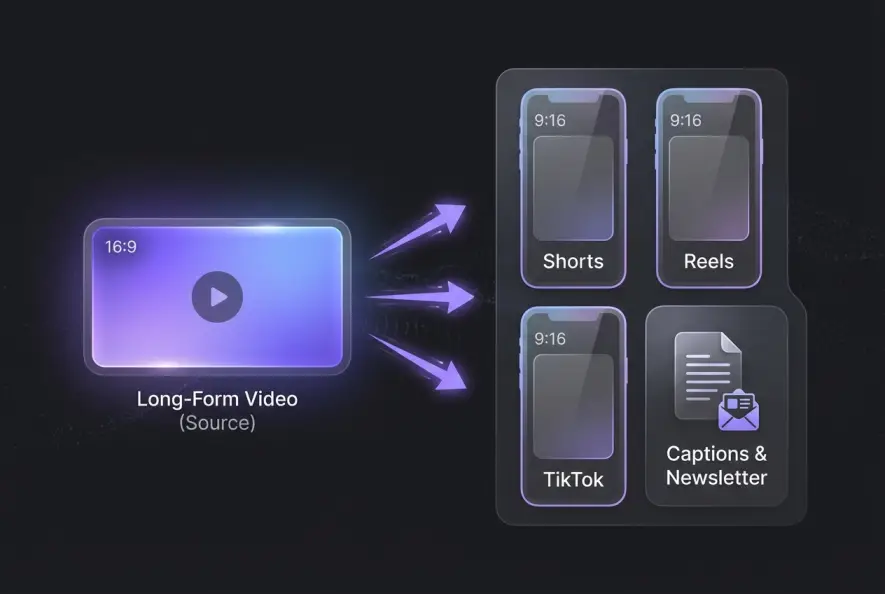
The solution lies in a systematic workflow for repurposing video content—turning a single long-form video into ten or more platform-native micro-assets across Instagram Reels, TikTok, YouTube Shorts, and written channels without starting from scratch each time. By shifting from a single-upload mindset to an asset-extraction strategy, you can double your audience reach while cutting your ongoing production time in half.
Don't edit your short clips directly on your main long-form video timeline. Export high-bitrate full audio and video segments first, then edit them in dedicated vertical timeline sessions to preserve frame rate quality and layout structure.
Why Most Creators Fail at Video Repurposing
The biggest reason content recycling gets a bad reputation is the lazy cross-posting trap. Many creators simply take a horizontal 16:9 widescreen video, place black letterbox bars at the top and bottom, and post it directly to TikTok or Instagram Reels without adapting the pacing or framing.
Social media algorithms treat this approach with aggressive distribution penalties. Modern recommendation engines prioritize viewer watch time, completion rates, and immediate visual retention. When a mobile user scrolls past a video with letterboxing or tiny, unreadable text, it instantly signals low effort or repurposed corporate advertising. According to official guidelines from the Instagram Creators Hub, native, full-screen vertical video formats designed specifically for mobile viewports receive significantly higher organic distribution than unformatted widescreen ports.
Furthermore, audience behavior varies dramatically across platforms. A YouTube viewer sitting at a desktop or television screen expects a deliberate, paced intro. A mobile user scrolling through vertical feeds demands instant gratification and high visual energy within two seconds.
This is why your cross-posted videos stall at 300 views despite containing world-class advice.
To build a distribution engine that actually grows your account, you need a repeatable four-step framework: Audit & Extract, Re-Frame & Re-Hook, Transcribe & Convert, and Strategic Distribution.
Step 1: Audit and Extract High-Density Value
Never cut short-form clips at random. A great long-form video contains natural narrative waves—moments of setup, deep explanation, and key conclusions. Your goal during the audit phase is to locate standalone value pockets that do not rely on the rest of the video to make full sense.
Imagine a 15-minute tutorial video on audience growth. Within that video, you likely spent three minutes explaining a specific thumbnail design framework. That three-minute segment is a perfect candidate for extraction because it answers one discrete question completely.
Look specifically for three types of short-form hooks:
- The Counter-Intuitive Statement: A bold claim that challenges conventional wisdom within your niche (e.g., "Posting every day is ruining your reach").
- The Direct Process Breakdown: A step-by-step breakdown explaining how to solve a specific problem (e.g., "The 3-step lighting setup for under $50").
- The High-Emotion Story Beat: A personal realization, failure, or turning point that creates instant empathy and authority.
Before you touch the video editing timeline, pulling the clean text transcript with Creators Grid's Transcript Extractor lets you scan twenty minutes of spoken audio in under two minutes to highlight high-impact sentences and note exact timestamps. Once you identify three to five distinct moments, mark those timestamp ranges for export as raw source clips.
Step 2: Re-Frame and Re-Hook for Vertical Feeds
Once you have extracted your raw video clips, you must adapt them to the visual and pacing standards of short-form feeds.
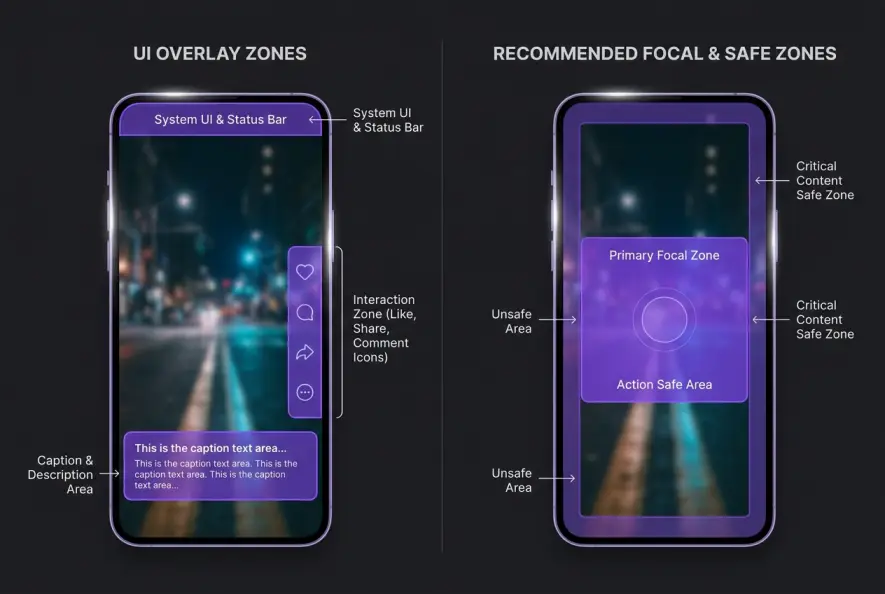
First, crop your video to a 9:16 vertical aspect ratio, keeping the main subject clearly centered. Pay close attention to platform user interface safe zones. Recommendations from the TikTok Creator Portal emphasize keeping essential text captions and visual focus points within the middle sixty percent of the frame to avoid overlap with likes, comments, and caption overlays.
Second, re-hook the clip immediately. In long-form video, you might take thirty seconds to set up a story. In short-form feeds, you have roughly 1.5 seconds before a user scrolls away. Cut out warm-up chatter, throat-clearing, and intro stings. Start the vertical clip at the exact frame where the high-value statement or provocative question begins.
Additionally, add bold, animated on-screen captions. Over 70% of short-form videos are watched on mute or in noise-sensitive environments. Large, high-contrast text placed in the lower-middle third of the screen keeps viewers anchored even without sound.
Avoid leaving silent pauses or awkward breath gaps at the start of vertical clips. On fast-moving short-form feeds, even a 0.5-second delay in spoken audio dramatically increases swipe-away rates.
Step 3: Convert Video Audio into Written Micro-Assets
Video is only one dimension of a complete content distribution framework. The spoken words inside your long-form video contain the precise material needed for written platforms like LinkedIn, X (formerly Twitter), newsletters, and text-based Instagram carousels.
Take one key lesson from your long-form transcript and reformat it into a structured text post. A three-minute video section explaining a workflow can easily become:
- A 5-Slide PDF Carousel for LinkedIn: Each slide highlights one key takeaway with clean typography and simple visual icons.
- A Concise X Thread: A punchy bullet-point breakdown starting with an engaging hook statement.
- A Value-Packed Newsletter Section: A short written takeaway that bridges readers directly back to the original full-length YouTube upload.
Publishing multi-format content reinforces your brand message across different audience preferences. Research highlighted by the YouTube Official Blog reveals that creators who engage audiences across multiple formats build stronger brand recall and higher overall channel loyalty than single-format creators.
Step 4: Strategic Batch Scheduling & Platform Matrix
The final step is distribution. Never dump all your repurposed assets onto every platform at the exact same hour. Stagger your posting timeline across one to two weeks so your audience encounters your core message through fresh angles over time.
To optimize performance, tailor each asset according to platform-specific parameters:
| Platform | Format | Ideal Length | Primary Metric | Focus Area |
|---|---|---|---|---|
| YouTube Shorts | 9:16 Vertical | 30–50 Seconds | Shown in Feed & View % | Strong loop & visual hook |
| Instagram Reels | 9:16 Vertical | 15–30 Seconds | Saves & Shares | On-screen text & trending audio |
| TikTok | 9:16 Vertical | 20–45 Seconds | Watch Time & Comments | Casual delivery & raw captions |
| LinkedIn Video | 9:16 or 1:1 | 30–60 Seconds | Click-Throughs & Reposts | Professional context & clear takeaway |
Building a streamlined approach to repurposing video content isn't about working harder; it's about treating every long-form upload as an asset library rather than a one-time broadcast.
Strategic Summary: From Creator to Content Distributor
Shifting your workflow from creating single posts to managing a content engine completely changes your production math. Instead of needing five original video ideas every week, you only need one strong long-form concept that yields a full calendar of social assets.
When you adopt a long-term mindset toward repurposing video content, you break free from the content treadmill, protect your energy, and maximize the real value of every video you film.
Creators Grid Team
Empowering creators.
Actionable insights, strategies, and tools for the next generation of digital creators.
Frequently Asked Questions
No. Major social platforms like YouTube, Instagram, and TikTok operate in isolated ecosystems. Reposting native vertical clips to multiple channels reaches different audience segments without algorithmic penalties, provided the video is formatted natively without third-party watermarks.
It is best practice to wait 24 to 48 hours after your main video goes live. This gives your subscriber base time to watch the full-length upload on YouTube before short-form clips start appearing on Instagram Reels, TikTok, or Shorts.
Absolutely. In fact, auditing your top-performing archive videos is one of the fastest ways to find high-performing clip ideas. Look for evergreen topics with high retention graphs in your analytics.
Automated tools work well for rough transcript drafting and finding candidate clips. However, manual refinement of the hook, visual framing, and caption timing ensures the video feels polished and platform-native.
Always edit your original master clips in a standalone video editing app or desktop software before uploading. Never download a video directly from TikTok or Instagram to post elsewhere, as embedded platform watermarks trigger severe algorithmic reach penalties.
A well-structured 15-minute long-form video typically yields 3 to 5 strong short-form vertical clips, 1 to 2 text-based carousels, and 2 social media threads or newsletter updates.